
Volley Manager — an app to run friendly volleyball games
- Year
- 2026
- Role
- Product strategy, UX/UI Design, Android development
- Category
- Apps
- Tools
- Kotlin, Jetpack Compose, Material Design 3, Room, Firebase
Context
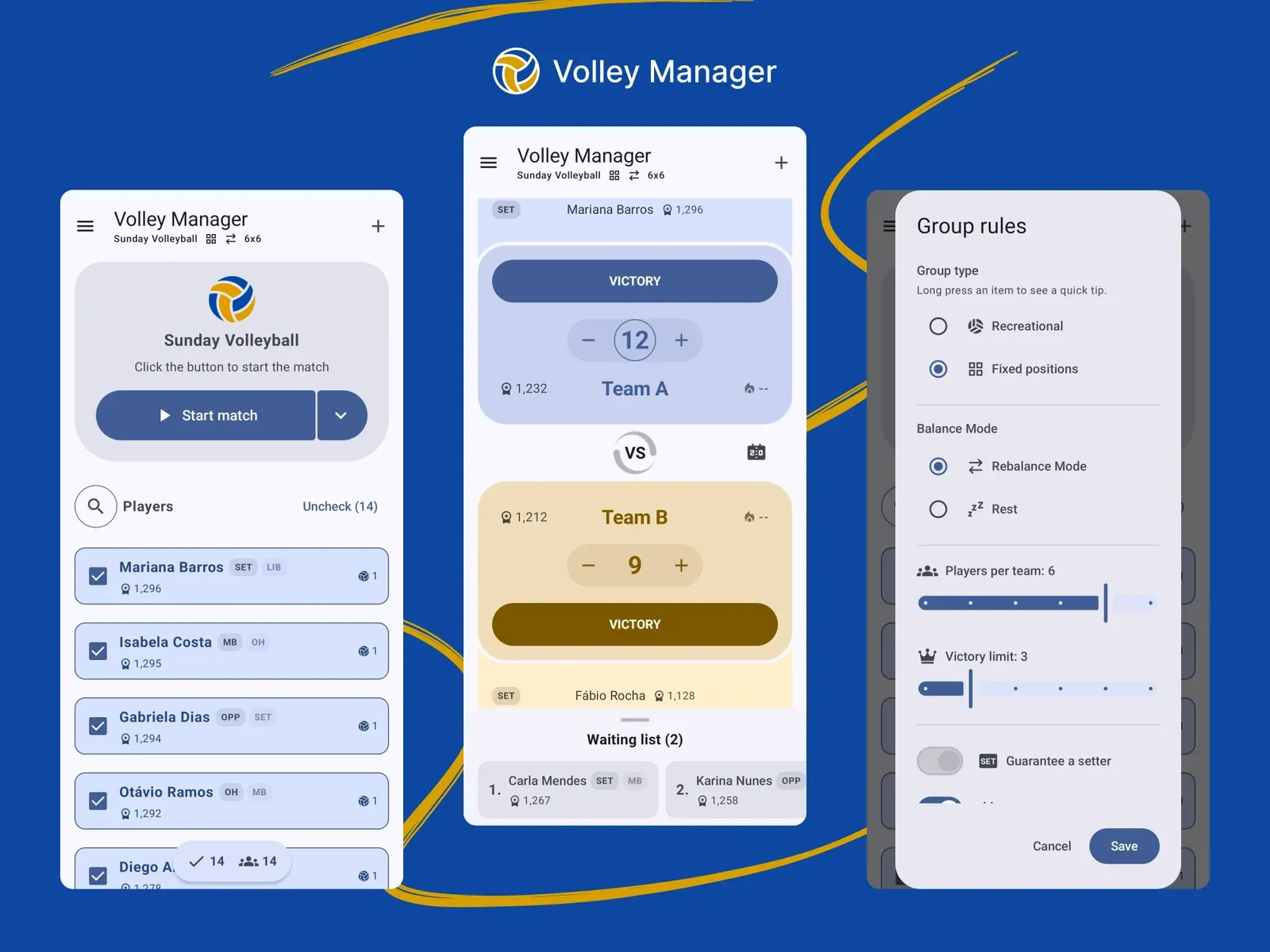
A self-initiated product, design and development project. Recreational volleyball organizers, usually with around 20 players per session, pick teams on paper or on the fly, which leads to arguments about cliques, unbalanced teams and who should play next.
It is a social problem before it is a technical one, because the feeling of unfair access to the court wears the group down and pushes players away.
Challenge
Turn subjective decisions into explicit, configurable and repeatable rules, in an interface the organizer can operate phone in hand at the edge of the court without slowing the game down, and without exposing players through rankings.
Solution & design decisions
- 01
Balanced draw by Elo
Each player has an Elo rating, starting at 1200 and updated after every match. The app builds teams with close averages and spreads priority players, such as setters or gender balance, between them.
- 02
Fair queue rotation
Whoever has played less enters first. Late arrivals get a toll based on the average number of games played that day, so nobody cuts the line.
- 03
Winning streak rules
The organizer sets the consecutive-win limit, from 1 to 6, and the mode. In Rebalance, the winning team is split. In Rest, the winners sit out and the waiting teams come in.
- 04
Configure before playing
Onboarding puts the group rules first, before the first match. Each group is independent and can be recreational or use fixed positions, such as setter, outside hitter, middle blocker and libero.
- 05
Elo as an aid, not a judgment
Showing Elo and match counts is optional, and sharing the history is the organizer's choice, so the group never feels put on display.
- 06
Familiar interface and documented logic
The interface follows Material Design 3, with a big scoreboard and light and dark themes. Personas, business rules and flowcharts of the app's decisions were documented.
Deliverables
- Personas and usage scenarios for the organizer and the recurring player
- Business rules matrix and team-building algorithm
- Flowcharts of the app logic, covering groups, check-in, teams, end of match and substitutions
- Material Design 3 interface with scoreboard, history and light and dark themes
- Android app in Kotlin and Jetpack Compose, with a local Room database
- Optional premium features, such as cloud sync and a live scoreboard for spectators
- Store promotional images, privacy policy and terms of use in three languages
Outcome
An independent, open-source (GPL-3.0) Android app in three languages, with an iOS version in progress and the product rules documented from problem to flowchart.
Gallery
Want a result like this for your project?
Tell me what you need and get a quick reply.
More projects
Graphic Design
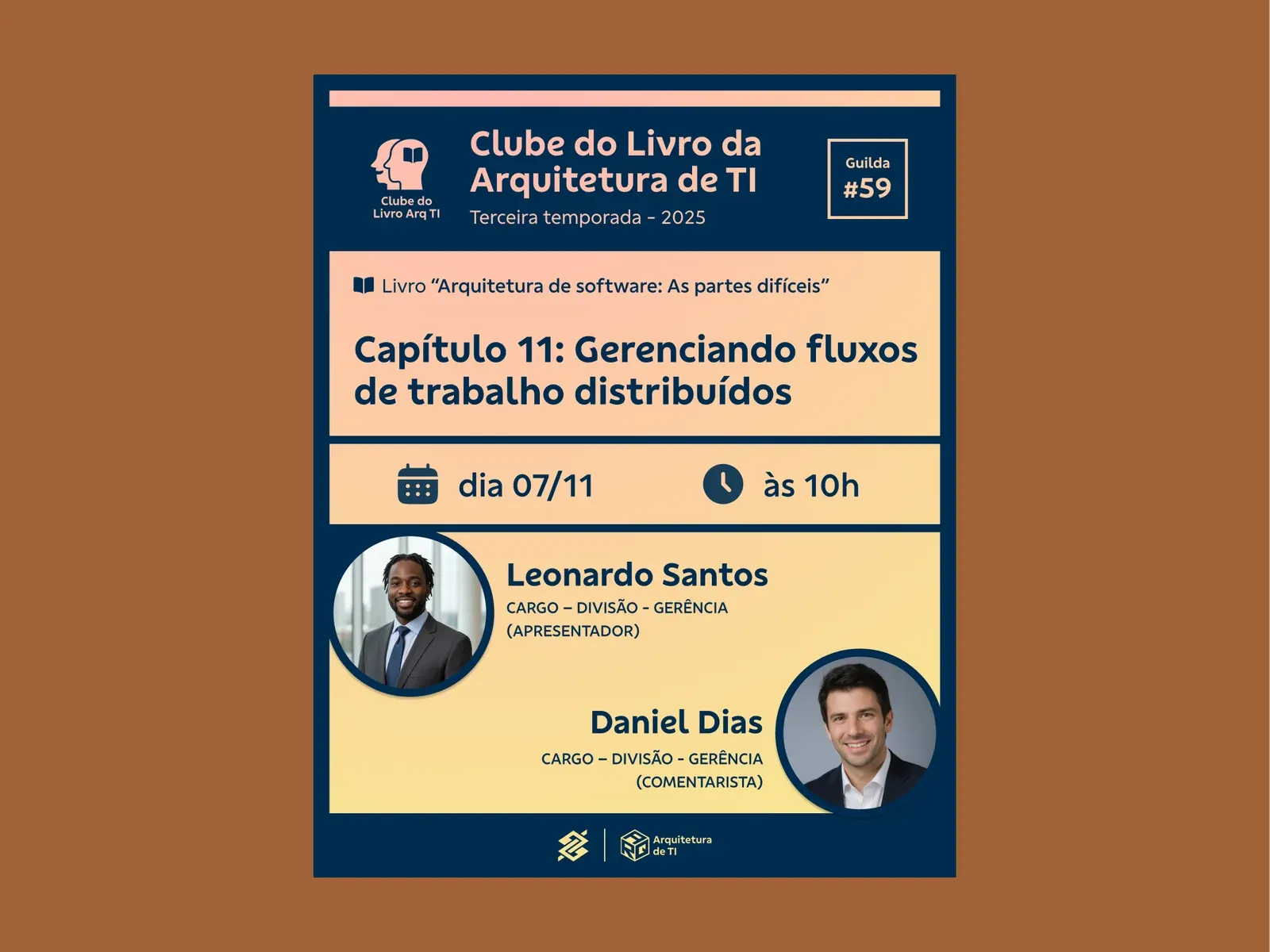
Visual identity for the IT Architecture Book Club
A refreshed identity for a corporate book club, with clearer hierarchy and a gradient system that changes with every meeting.
Read case study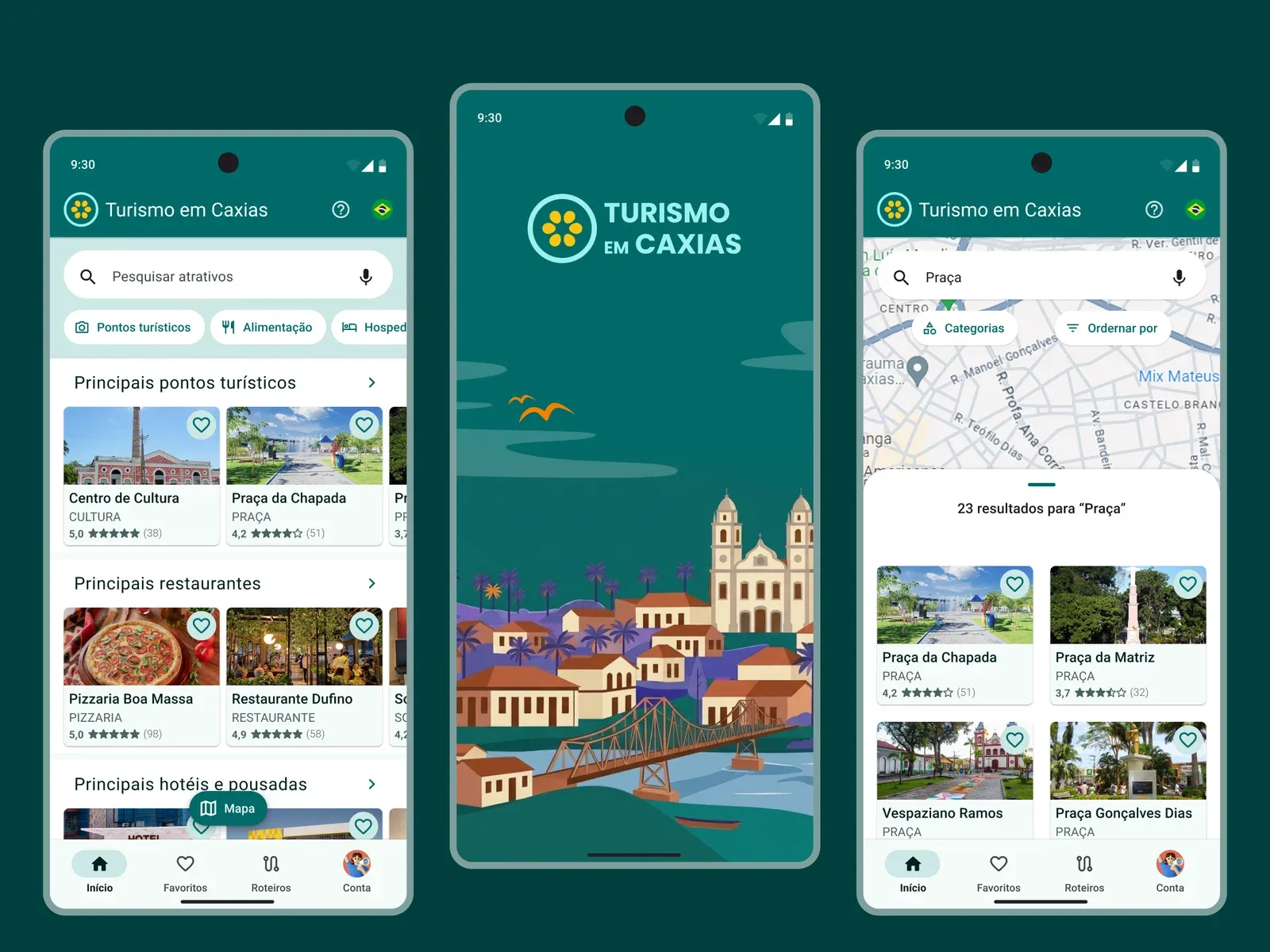
Apps
Turismo em Caxias — mobile app prototype
From audience research to the final prototype, an app that brings a city's attractions, favorites and itineraries together in one place.
Read case study
Architecture
Umbela Hostel — design and visual identity
A hostel that works like a shared home, with bioclimatic design, universal accessibility and its own logo. Graded with top marks.
Read case study